PSYCH HOME RESEARCH GRAD UNDERGRAD RESOURCES RSVP SUBJECTS NEWS CONTACT US

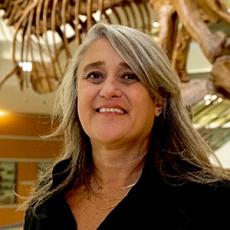
Tania Lombrozo
Assistant Professor
Ph.D., Harvard University

Tania Lombrozo Campus Contact Information
Departmental Area(s): Cognition, Brain & Behavior
Director: Concepts and Cognition Lab

Interests: Cognitive psychology of explanation and understanding; concepts, theories, and causality; moral reasoning; philosophy and psychology

My research explores several topics within cognitive psychology. How do we conceptualize the world around us? Why are we driven to seek explanations, and what makes some explanations more satisfying than others? How do we represent and reason about theoretically fundamental concepts like causation, functions, and moral status? Investigating these basic questions about cognition involves the marriage of experimental methods from psychology with the conceptual analysis of analytic philosophy. Accordingly, much of my work is informed by philosophy of science, epistemology, and moral philosophy.

Current research in my lab focuses on the following issues:

Explanation and Causation. When confronted with something we don't understand, most of us can't help but wonder "why?" Moreover, we have strong intuitions about what counts as a satisfying explanation. We seem to prefer explanations that are simple and provide a reason for what we're trying to explain. This line of work investigates what constitutes an explanation, and in particular why explanations in terms of reasons, functions, or goals seem to be preferred. What's the relationship between these so-called functional explanations and our causal beliefs about the world? How does reasoning about an object's function change the way we categorize and reason about it? Might a preference for functional explanations help explain the appeal of religious ideas like intelligent design creationism?

Explanation and Probability. Many real-world decisions involve assessing probability: Is it more likely a Republican or a Democrat will win the next presidential election? Is my congestion due to allergies or a cold? This line of work investigates how we assess the probability of claims, and in particular the hypothesis that probability judgments are informed by evaluating explanations. First, is a claim judged more probable if it is easy to explain? And second, is a claim judged more probable if it provides a good explanation for something else? These issues relate to Inference to the Best Explanation in philosophy.

Moral Reasoning. What makes an entity worthy of moral consideration? Most people agree that people have a moral status not shared by tables and rocks, but many disagree about the moral status of entities like non-human animals and human fetuses. This line of work investigates individual differences in views about moral status as a way to address basic questions about moral reasoning. In particular, what's the relationship between the way an entity is conceptualized and its perceived moral status? What changes people's moral intuitions?

Selected Publications
Lombrozo, T. (2006). The structure and function of explanations. Trends in Cognitive Sciences, 10(10), 464-470. (journal)

Sloman, S., Lombrozo, T. & Malt, B. (In Press). Ontological commitments and domain-specific categorization. In M. J. Roberts (Ed.). Integrating the Mind. Hove, UK: Psychology Press.

Lombrozo, T. & Carey, S. (2006). Functional explanation and the function of explanation. Cognition, 99, 167-204. (journal)

Lombrozo, T., Shtulman, A., & Weisberg, M. (2006). The Intelligent Design controversy: lessons from psychology and education. Trends in Cognitive Sciences, 10(2), 56-57. (journal)
Department of Psychology | 3210 Tolman Hall, Berkeley, CA 94720 USA
UC Berkeley Home | Contact Webmaster
Copyright (c) 2007 The Regents of the University of California
This Page Last Updated 9/16/07